
Women's Hair Loss:

Understanding the Causes & Finding the Right Solution

We know how personal hair loss is — and we know you've probably been searching for real answers. Whether you're noticing more hair in your brush, thinning along your part, or changes that started after pregnancy, stress, or a medical treatment, you are not alone. At The Hair for Life Center, we have spent over 30 years helping women through exactly what you're experiencing. And we're here to tell you: there is a solution.

Common Causes of Hair Loss in Women

Hair loss in women is more common than most people realize — and no two women experience it the same way. Understanding what's behind your hair loss is the first step toward finding a solution that actually works for you. Here are some of the most common causes we see.

Trichotillomania

Trichotillomania is a hair-pulling condition tied to stress or anxiety that leads to noticeable thinning and bald patches over time. It's an incredibly personal journey, and we're here to help restore your hair while you work through it.

Hormonal Hair Loss

Menopause, thyroid disorders, PCOS, and hormonal shifts can all trigger gradual thinning or shedding in women — often before you even realize what's happening. If your hair has been changing, it's never too late to do something about it.

Chemotherapy

Chemotherapy can trigger hair loss within weeks of starting treatment, making an already hard journey even harder. We offer a private, compassionate approach to restoring your hair so you can focus on what matters most — your health.

Stress-Related Hair Loss

Significant stress can cause a type of hair loss called telogen effluvium, where large amounts of hair shed a few months after a difficult period. The good news is that it's often temporary, and you don't have to wait it out with thinning hair.

Alopecia

Alopecia is an autoimmune condition causing patchy to more widespread hair loss that can feel unpredictable and difficult to manage. We've worked with many women living with alopecia, and there are real options out there beyond wigs and waiting.

Postpartum Hair Loss

Postpartum hair loss happens when estrogen drops after delivery, causing hair that held on through pregnancy to shed all at once. It's a completely normal part of recovery, but we know that doesn't make it any less difficult to deal with.

COVID Hair Loss

Hair loss after COVID is more common than most people realize — and it can begin weeks or even months after recovery, making it especially confusing to navigate. If you have noticed significant shedding or thinning since your infection, you are not alone, and there is something you can do about it now.

A Solution for Women's Hair Loss

The Intralock Process

No Glues

Gentle on even the finest, most fragile hair

Money Back Guarantee

*terms and conditions apply

Completely Private

Every application takes place in your own private room

Fully Customized

Built around your hair, your needs, and your goals

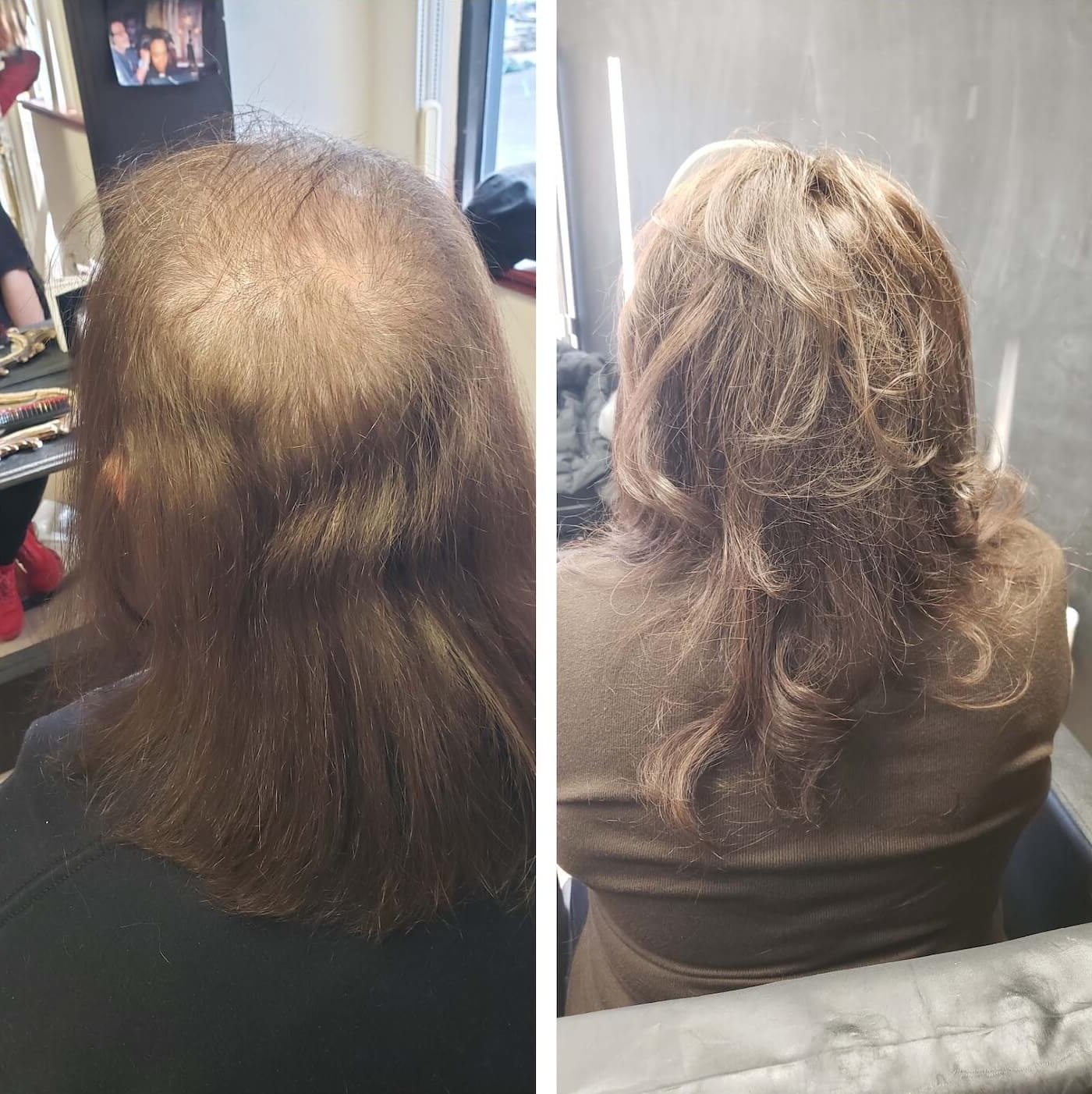
No matter what's causing your hair loss, we have a solution that works with your natural hair — not against it. No surgery. No glue. No one-size-fits-all approach.

Over 30 years ago, The Hair for Life Center invented the Intralock Process — a proprietary, non-surgical technique that blends real human hair directly into your existing hair. Fine hair becomes fuller. Short hair becomes longer. And broken edges become a thing of the past. You wash it, brush it, and style it just like it's your own — because it is.

We know for women, hair is not a luxury — it is a necessity. And we've spent over 30 years proving it.
Frequently Asked Questions About Women's Hair Loss

What is the most common cause of hair loss in women?

The most common cause of hair loss in women is androgenetic alopecia — also called female pattern hair loss — which is linked to genetics and hormonal changes. But hair loss can also be triggered by stress, postpartum hormone shifts, thyroid conditions, nutritional deficiencies, certain medications, and chemical damage. Many women are dealing with more than one factor at once, which is exactly why we never recommend the same approach for everyone.
Not always — and even when it is, that doesn’t mean you have to live with thinning hair. Some types of hair loss, like postpartum shedding or stress-related hair loss, are temporary and resolve on their own. Others may be ongoing. Either way, the Intralock™ Process can restore the look and feel of full, healthy hair while you navigate what’s right for you.
Hair loss can happen at any age, but it becomes more common after 40 as hormonal shifts from perimenopause and menopause begin. Postpartum hair loss affects women of all ages after childbirth, and conditions like alopecia or trichotillomania can appear at any stage of life. If you’re noticing changes, it’s never too early — or too late — to reach out.

Because the Intralock Process works with your natural hair, your hair will continue to grow — which means monthly visits are scheduled to keep everything looking its best. If you’re looking for a lower-maintenance option, we offer non-maintenance programs as well. We’ll find what works for your life.

Your consultation is completely private and completely pressure-free. We sit down with you, learn about your hair history, take a look at where you are today, and walk you through exactly what the Intralock Process would look like for you. We also offer a live demonstration — so you can see the results for yourself before making any decisions.

Restore Your Hair, Restore Your Confidence — Starting Today!

Scroll to Top