
Alopecia

Understanding Hair Loss From Autoimmune Conditions & Finding a Solution

Alopecia can feel unpredictable, isolating, and deeply personal — because it is. Whether you're dealing with a small patch that appeared overnight or more widespread loss that has progressed over time, the impact on your confidence and your sense of self is real. At The Hair for Life Center, we have spent over 30 years working with women living with alopecia, and we know that there are real, lasting options beyond wigs and waiting. You deserve to feel like yourself again — and we can help.

What Is Alopecia?

Alopecia is a broad term for hair loss, but it most commonly refers to alopecia areata — an autoimmune condition in which the immune system mistakenly attacks hair follicles, causing hair to fall out in patches. It can affect the scalp, eyebrows, eyelashes, and other areas of the body, and it can range from a single small patch to complete hair loss. Alopecia affects women of all ages and backgrounds, and while it is not physically harmful, its emotional and psychological impact can be significant. There is currently no cure, but there are solutions.

Types of Alopecia

Alopecia is not one-size-fits-all — and the type you're experiencing shapes both what the loss looks like and what your options are. The three most common types seen in women are:

Alopecia Areata

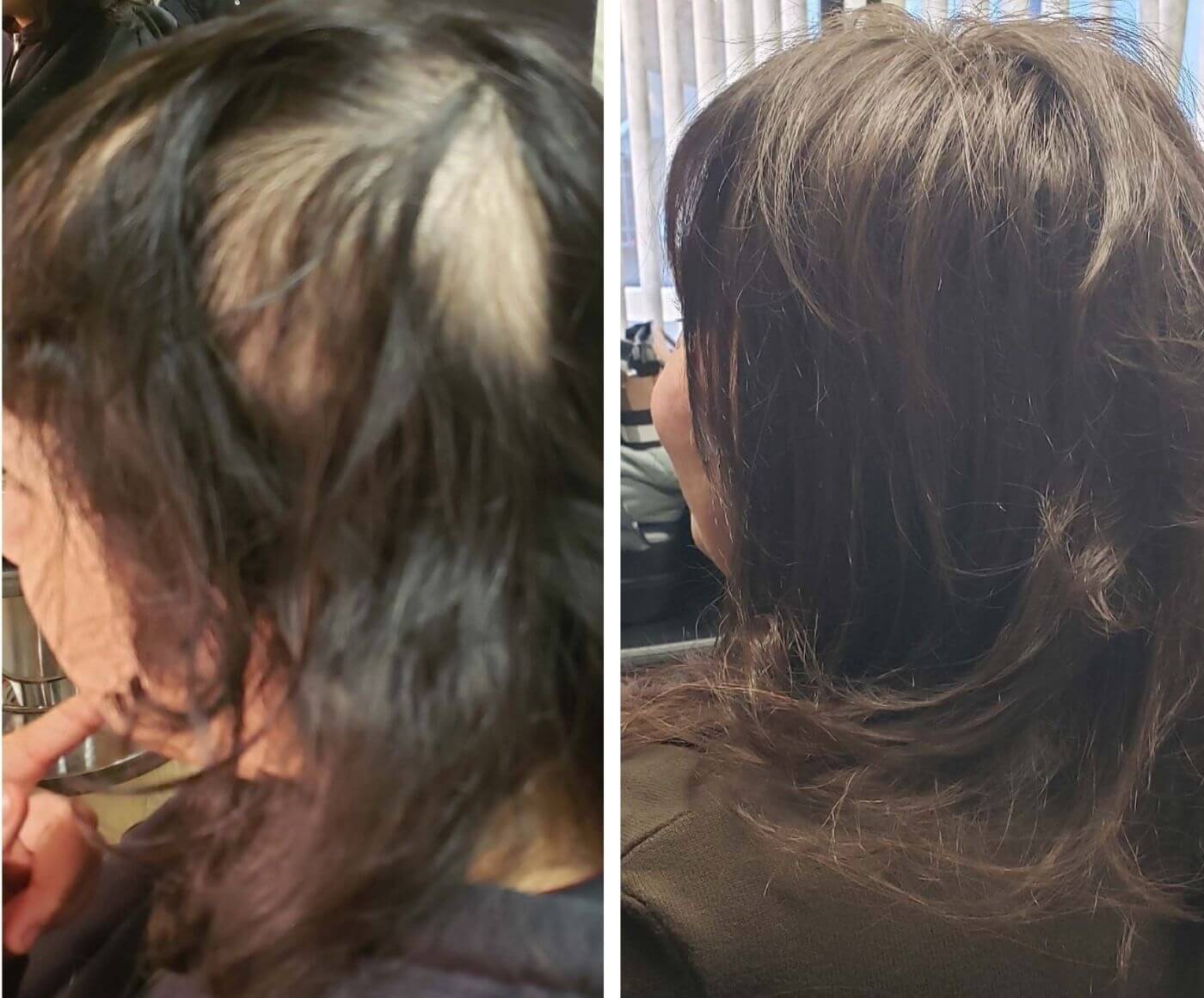
Alopecia areata is the most common form, caused by an autoimmune response that attacks the hair follicle. It typically appears as one or more smooth, circular bald patches on the scalp and can come and go unpredictably. Some women experience a single episode that resolves on its own; others face recurring or progressive loss that becomes increasingly difficult to manage without intervention.

Androgenetic Alopecia

Also known as female pattern hair loss, androgenetic alopecia is driven by a genetic sensitivity to androgens and is the most common cause of gradual thinning in women. Unlike alopecia areata, it doesn't cause patchy loss — instead, it produces a slow, diffuse thinning along the part line and crown that tends to worsen over time and rarely reverses without treatment.

Traction Alopecia

Traction alopecia is caused by prolonged tension on the hair follicle from tight hairstyles — braids, weaves, ponytails, or extensions worn repeatedly over time. It most commonly affects the hairline, temples, and edges. Unlike autoimmune forms of alopecia, traction alopecia is preventable — but once follicle damage becomes permanent, the hair in those areas will not grow back on its own.

How Alopecia Affects Your Hair

The way alopecia affects your hair depends on the type and how far it has progressed. Alopecia areata typically produces sudden, patchy loss — smooth bald spots that can expand, merge, or shift unpredictably. Female pattern hair loss tends to be slower and more diffuse, with thinning concentrated along the part line and crown rather than in distinct patches. Traction alopecia targets the hairline and edges. Across all types, the common thread is that the follicle — the structure responsible for hair growth — is under stress. In early stages, intervention can preserve follicle function. In later stages, restoring the appearance of full hair becomes the most immediate and impactful priority.

Signs & Symptoms of Alopecia

Alopecia can present differently depending on the type, but there are common warning signs worth knowing. These include:

Frequently Asked Questions About Alopecia

Alopecia has several causes depending on the type. Alopecia areata is an autoimmune condition with a genetic component. Androgenetic alopecia is linked to hormonal sensitivity and heredity. Traction alopecia results from sustained mechanical stress on the follicle. In some cases, multiple types can overlap — which is why understanding the specific cause is an important first step.
It depends on the type and how early it’s addressed. Alopecia areata can be unpredictable — some women experience full regrowth, while others face recurring or progressive loss. Female pattern hair loss tends to be ongoing without intervention. Traction alopecia can become permanent if follicle damage is severe. Regardless of where you are in the process, there are options.

In some cases — particularly early-stage alopecia areata — hair can regrow on its own or with treatment. For androgenetic alopecia and advanced traction alopecia, reversal is less likely. Rather than waiting and hoping, many women choose to restore their hair’s appearance now while continuing to address the underlying condition. The Hair for Life Center makes that possible without surgery or harsh treatments.

Yes — stress is known to trigger and worsen alopecia areata in particular. It can push follicles into a resting phase, accelerate shedding, or trigger new patches in women who are already predisposed. Managing stress is an important part of overall care, but it is rarely sufficient on its own to stop or reverse significant hair loss.

Yes. The Intralock Process is designed to work alongside whatever hair you have — whether that’s significant thinning, patchy loss, or more widespread coverage needs. It blends real human hair directly between your existing hair or onto the affected area where hair has fallen out, without glue, metal clips, or cylinders, creating a natural, full result that you manage just like your own hair.

Yes. Because the Intralock Process uses no glue and no chemicals, it is one of the safest options available for women with sensitive scalps — including those managing active alopecia areata. We take a completely individualized approach and will always assess your scalp’s current condition before recommending the right solution for you.

Hair Restoration for Alopecia: The Hair for Life Center

The Intralock Process

Living with alopecia means living with uncertainty — and we understand how exhausting that can be. At The Hair for Life Center, we can't control what your immune system does next. But we can make sure that whatever happens, you always have full, beautiful hair. Since the process is so flexible, we can grow with your hair loss needs.

The Intralock Process is a non-surgical technique that blends real human hair between your fine, thin strands — filling in patches, restoring density, and creating a completely natural result that moves, feels, and behaves like your own hair. No glue. No metal clips or cylinders. It's applied in as little as 2 to 3 hours in the complete privacy of your own application room, and the result is immediate.

Alopecia doesn't get to decide how your hair looks. You do.
Scroll to Top