
Stress-Related Hair Loss:

Understanding Why It Happens & What You Can Do

If you've been through a period of intense stress — a loss, an illness, a major life change — and noticed significant hair shedding a few months later, you are not imagining it. Stress is one of the most common triggers of sudden hair loss in women, and it can be alarming when it happens. At The Hair for Life Center, we've spent over 30 years helping women navigate exactly this — and we want you to know there is a solution, whether your hair loss is ongoing or you simply can't wait for it to grow back on its own.

What Is Stress-Related Hair Loss?

Stress-related hair loss is most commonly a condition called telogen effluvium — a temporary disruption of the hair growth cycle triggered by physical or emotional stress. When the body experiences significant stress, a large number of hair follicles are pushed into the resting phase at once, leading to widespread shedding — typically two to three months after the stressful event. It can feel sudden and overwhelming, but in most cases it is reversible.

What's Causing Your Stress-Related Hair Loss?

Not all stress-related hair loss has the same trigger. The three most common causes each affect the body differently — and recognizing yours can help you understand what comes next.

Emotional Stress

Grief, anxiety, relationship changes, work pressure, and other forms of emotional stress can all trigger telogen effluvium. The hair loss typically appears two to three months after the most intense period of stress — which means by the time you notice it, the trigger may already be behind you. Managing the underlying stress is important, but the shedding itself can persist for months even after things stabilize.

Physical Stress / Illness

Major surgery, serious illness, high fever, or significant weight loss can all shock the body into a stress response that disrupts the hair growth cycle. Physical stressors are often more abrupt than emotional ones, which can make the resulting hair loss feel sudden and extreme. This type of telogen effluvium typically resolves as the body recovers — but regrowth can take longer than most women expect.

Chronic Stress

When stress is sustained over a long period of time — rather than a single acute event — hair loss can become chronic rather than temporary. Chronically elevated cortisol levels interfere with the hormones that support healthy hair growth, leading to ongoing shedding and thinning that doesn't resolve on its own. This type of stress-related hair loss often requires more than just time to address.

How Stress Affects Your Hair

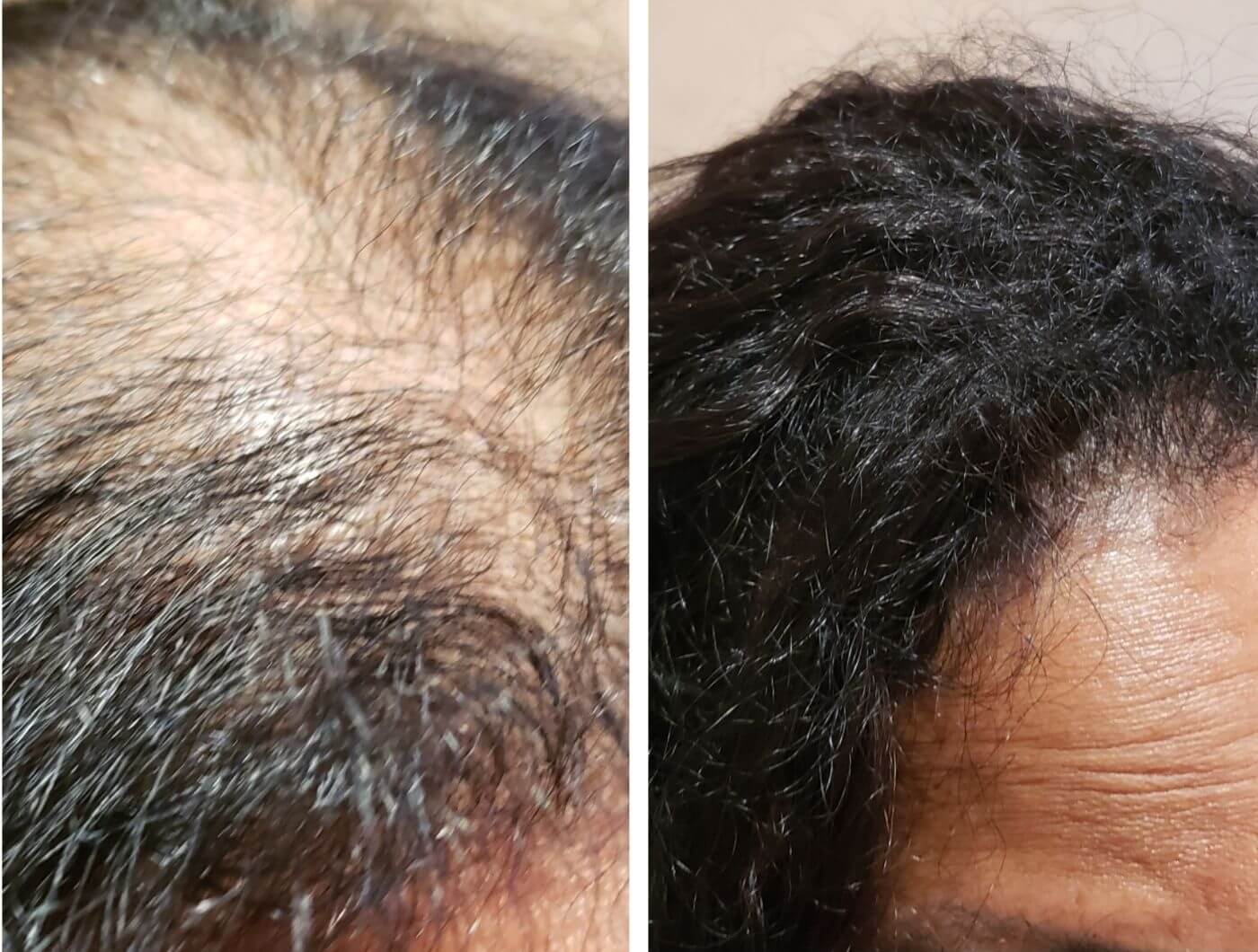
Stress-related hair loss doesn't look like typical patterned thinning — it tends to show up all at once and all over. Women with telogen effluvium often describe finding alarming amounts of hair in the shower, on their pillow, or in their brush, sometimes over a period of weeks or months. Because so many follicles shed simultaneously, the loss can be dramatic — even though the scalp itself is not permanently affected in most cases. The hair that sheds is typically replaced by regrowth, but the process can be slow and uneven, leaving the hair looking noticeably thinner in the meantime.

Signs & Symptoms of Stress-Related Hair Loss

Stress-related hair loss has a distinct pattern that sets it apart from other causes. Common signs include:

Frequently Asked Questions About Stress-Related Hair Loss

Yes — stress is one of the most well-documented triggers of sudden hair loss in women. When the body experiences significant physical or emotional stress, it can disrupt the hair growth cycle and push large numbers of follicles into a shedding phase simultaneously. The result is a condition called telogen effluvium, which can cause dramatic hair loss within a few months of the triggering event.
For most women, telogen effluvium is temporary. Shedding typically peaks around three to six months after the triggering event and then gradually slows as the hair cycle resets. Full regrowth can take six to twelve months or longer. In cases of chronic stress, the shedding may continue until the underlying stressor is addressed.

In most cases, yes. Telogen effluvium does not permanently damage the hair follicle, which means regrowth is possible once the body stabilizes. However, the timeline for full recovery varies, and the hair may look noticeably thinner for an extended period. The Intralock Process can restore your hair’s fullness while you wait for natural regrowth to catch up.

Stress-related hair loss — or telogen effluvium — is characterized by sudden, diffuse shedding across the entire scalp, rather than a specific pattern or bald patch. It typically follows a stressful event by two to three months and often resolves on its own. Other types of hair loss, like androgenetic alopecia or alopecia areata, have different patterns, causes, and timelines.

Addressing the underlying stress is an important first step, but it won’t immediately stop the shedding or speed up regrowth. Many women also benefit from nutritional support and scalp care during recovery. If you don’t want to wait — or if the thinning is affecting your confidence — the Hair for Life Center Intralock Process can help restore the appearance of full hair right now, without surgery or harsh treatments.

Absolutely. The Intralock Process works beautifully for women experiencing telogen effluvium because it blends seamlessly with whatever hair remains and creates a full, natural result immediately. You don’t have to wait months for regrowth. We can restore your hair today.

Hair Restoration for Stress-Related Hair Loss:

The Intralock Process

You've already been through enough. The last thing you should have to worry about is your hair. At The Hair for Life Center, we work with women who are in the middle of it — not just recovering from it — and we know that waiting months for regrowth isn't always an option when your confidence is on the line every single day.

The Intralock Process is a non-surgical technique that blends real human hair directly between your existing hair, restoring fullness and volume wherever the thinning has taken hold. It works with your natural hair at any stage of the shedding or regrowth process — and because it uses no glue, clips, or cylinders, it's completely safe for even the most fragile hair. In as little as 2 to 3 hours, in the privacy of your own room, you'll leave looking like yourself again.

You don't have to wait it out. We can help you right now.
Scroll to Top