
Chemotherapy Hair Loss:

What to Expect & How to Restore Your Hair

Losing your hair during chemotherapy is one of the most visible and emotionally difficult parts of cancer treatment — and it happens fast. At The Hair for Life Center, we have spent over 30 years working with women going through exactly what you are facing. We know how much your hair means to you, and we know how much it matters to feel like yourself during one of the hardest chapters of your life. We are often told that the most devastating thing about cancer is losing your hair. When we help women regain their hair, it makes them feel healthier and happier.

What Is Chemotherapy-Related Hair Loss?

Chemotherapy-related hair loss — known medically as chemotherapy-induced alopecia — occurs because chemotherapy drugs target rapidly dividing cells throughout the body, including the cells responsible for hair growth. Unlike other types of hair loss, chemo-related shedding typically begins within two to four weeks of starting treatment and can affect hair on the scalp, eyebrows, eyelashes, and body. The degree of loss depends on the specific drugs and dosages used, but for many women, it is significant and sudden.

What to Expect With Chemotherapy Hair Loss

Hair loss from chemotherapy follows a fairly predictable path — but that doesn't make it any easier. Here's what typically happens at each stage.

During Treatment

Hair shedding usually begins two to four weeks after the first chemotherapy session. It often starts gradually — extra hair in the brush or shower — then accelerates quickly. Most women experience significant or complete scalp hair loss within a few weeks of shedding beginning, along with loss of eyebrows, eyelashes, and body hair.

After Treatment

Hair typically begins to regrow within two to three months after chemotherapy ends. Early regrowth may come in softer, curlier, or a different color than your original hair — a temporary change commonly known as "chemo curl." Full regrowth can take a year or more, and for some women, the hair that returns feels permanently different in texture or density.

Emotional Impact

For many women, hair loss is the most emotionally difficult side effect of chemotherapy — more visible than others and harder to hide. It can affect how you feel in public, at work, and with the people closest to you. Addressing the hair loss directly, rather than waiting it out, is one of the most powerful things you can do for your confidence during treatment.

How Chemotherapy Affects Your Hair

Chemotherapy disrupts the hair growth cycle at the root — literally. Because chemo drugs attack rapidly dividing cells, hair follicles are among the most affected tissues in the body. Hair that was actively growing is suddenly pushed into a resting or shedding phase all at once, rather than gradually. The result is often rapid, diffuse loss across the entire scalp rather than the patterned or gradual thinning seen with other conditions. In some cases, follicles can be temporarily weakened even after treatment ends, affecting the texture and density of regrowth.

Signs & Symptoms of Chemotherapy Hair Loss

Chemotherapy hair loss is usually one of the more recognizable side effects of treatment. Common signs include:

Frequently Asked Questions About Chemotherapy Hair Loss

Not all chemotherapy drugs cause hair loss, but many of the most commonly used ones do. Drugs that target rapidly dividing cells — particularly those used for breast, ovarian, and other common cancers — are the most likely to cause significant scalp hair loss. Your oncologist can tell you what to expect based on your specific treatment plan.
Hair loss typically begins two to four weeks after the first chemotherapy treatment. Shedding may start gradually and then accelerate quickly — many women experience significant loss within a few weeks of it beginning. The speed and degree of loss vary depending on the drugs and dosages involved.
For most women, yes — hair begins to regrow within two to three months after treatment ends. However, regrowth can take a year or more to fully return, and the texture or color may be temporarily different. In some cases, the hair that returns is permanently finer or thinner than it was before treatment.

We recommend going through the process post-treatment, after a few weeks of regrowth, as the process requires some hair to work with. But if your mid treatment, have minimal hair and the hair loss has stopped- we are happy to help you find a solution that makes you confident!

Absolutely. The Intralock Process uses no harsh chemicals, glues, or metal cylinders, making it easy to continue with X-rays. It is one of the safest and most scalp-friendly solutions available. It is specifically designed to be gentle on fragile and sensitive hair and scalp, which is exactly why it is well-suited for women going through chemotherapy.

You can explore your options at any point — including during treatment, provided that your hair loss has stopped. Many of our clients begin the process while still in treatment so they have full hair throughout. If you’re waiting until after, we recommend reaching out as soon as you feel ready. 

Hair Restoration for Chemotherapy Hair Loss

The Intralock Process

We know that going through cancer treatment is already more than enough to carry. Many of our clients feel that losing their hair is the most devastating part of the cancer diagnosis. At The Hair for Life Center, our role is to give you one less thing to worry about — so you can focus entirely on your health and your well-being.

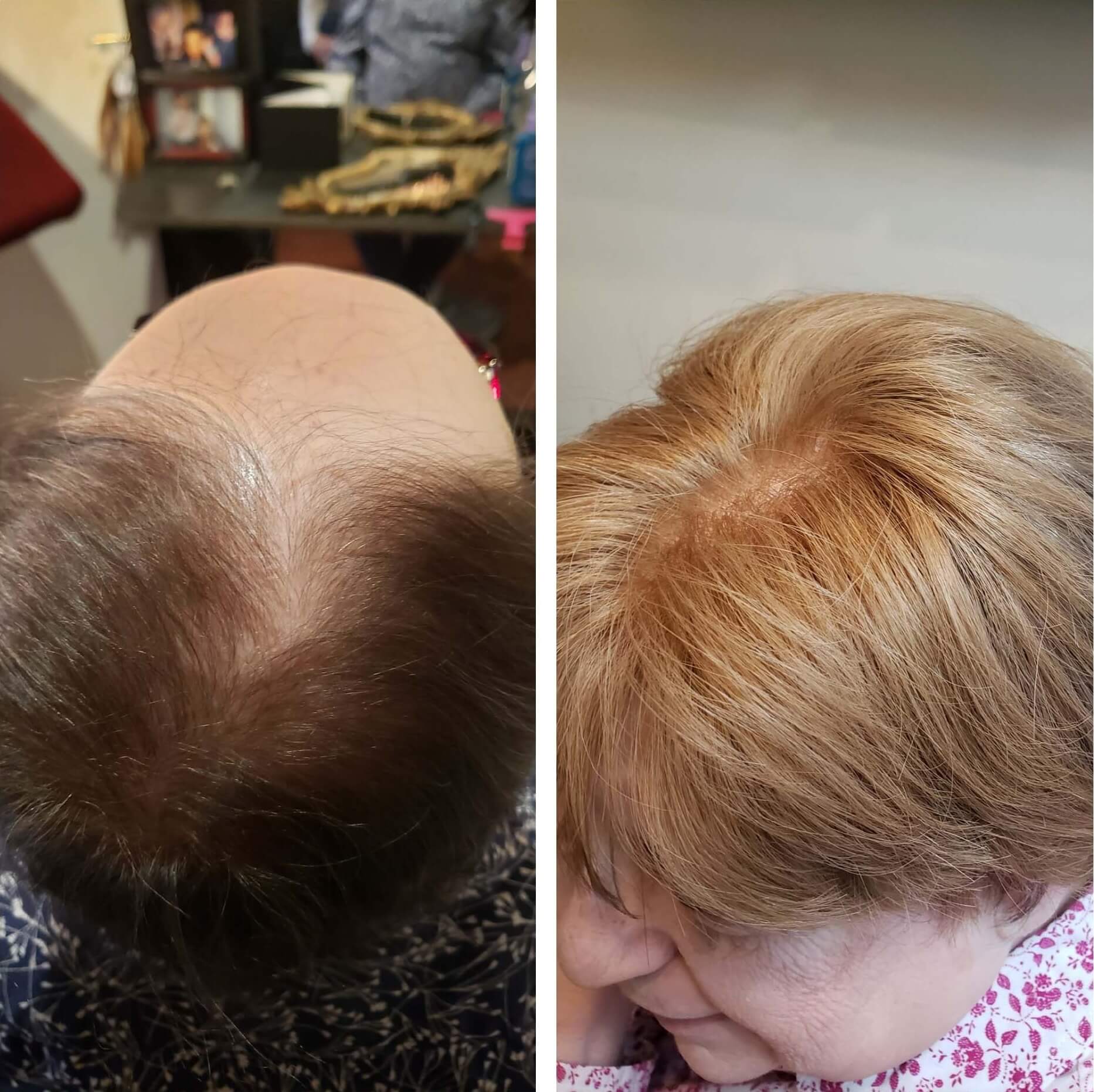
The Intralock Process is a non-surgical hair restoration technique that blends real human hair gently through your existing hair. No glue, no metal cylinders, no surgery. Just natural, full hair that you wash, brush, and style like your own, applied privately in as little as 2 to 3 hours.

You are going through enough. You deserve to look in the mirror and see yourself.
Scroll to Top