
Postpartum Hair Loss

Understanding Why It Happens & What You Can Do

You just brought a new life into the world — and now your hair is falling out in alarming amounts. Postpartum hair loss is one of the most common and least talked-about parts of life after pregnancy, and it can feel shocking when it happens. At The Hair for Life Center, we want you to know that what you're experiencing is completely normal — and that you don't have to just live with it while you wait for your body to recover. There is something you can do about it right now.

What Is Postpartum Hair Loss?

Postpartum hair loss — also called postpartum telogen effluvium — is a temporary form of hair loss that occurs after childbirth. During pregnancy, elevated estrogen levels keep hair in a prolonged growth phase, which is why many women enjoy fuller, thicker hair while pregnant. After delivery, estrogen levels drop sharply, causing all of that retained hair to shed at once. This typically begins two to four months after giving birth and can last for several months. While it is not permanent in most cases, the volume of shedding can be dramatic — and deeply distressing.

What to Expect With Postpartum Hair Loss

Postpartum hair loss follows a predictable arc — but how intense it feels varies significantly from woman to woman. Here's what the experience typically looks like at each stage.

The First Few Months

Most women don't notice any change in their hair during pregnancy — in fact, many experience the opposite. Elevated estrogen keeps more hair in the growth phase than usual, resulting in thicker, fuller hair that holds onto what it would normally shed. This is the buildup that sets the stage for what comes after delivery.

The Shedding Phase

Around two to four months after giving birth, that retained hair begins to shed — all at once. Women often describe finding shocking amounts of hair in the shower, on their pillow, or woven into their newborn's fingers. The shedding can feel sudden and extreme, but it is simply the body returning to its pre-pregnancy baseline. It typically peaks around month four and slows over the following months.

Recovery & Regrowth

For most women, postpartum shedding slows by six to twelve months postpartum, and hair gradually returns to its normal thickness. However, regrowth is rarely instant — short, wispy hairs along the hairline are common as follicles reactivate. Some women find their hair never quite returns to its pre-pregnancy texture or density, particularly after multiple pregnancies or with underlying hormonal factors at play.

How Postpartum Hair Loss Affects Your Hair

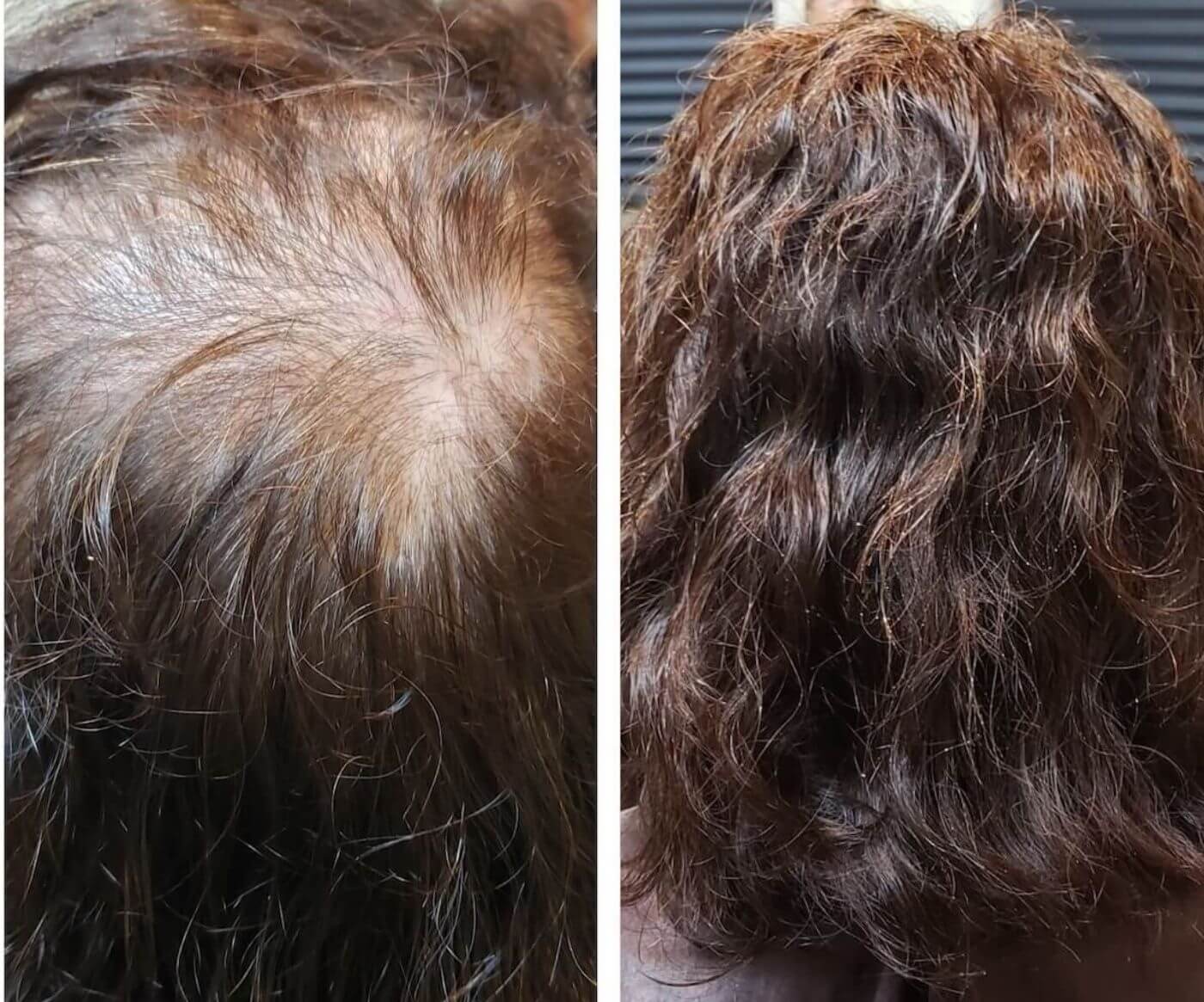
Postpartum hair loss tends to show up as diffuse shedding across the entire scalp rather than distinct bald patches. Most women notice it first in the shower drain or in their brush — and the volume can be startling. Over time, the overall thickness and density of the hair decreases noticeably, and the hairline — particularly around the temples and forehead — is often the area where thinning becomes most visible. Short regrowth hairs can create a halo of frizz or flyaways along the hairline, making the thinning even more apparent when hair is pulled back. For many new mothers, the timing couldn't feel worse.

Signs & Symptoms of Postpartum Hair Loss

Postpartum hair loss has a distinct pattern that separates it from other causes. Common signs include:

Frequently Asked Questions About Postpartum Hair Loss

Postpartum shedding typically begins two to four months after giving birth and peaks around month four. For most women, it slows significantly by six to twelve months postpartum. However, every woman’s timeline is different — some experience a shorter, more intense shed, while others deal with more gradual thinning that persists longer, particularly with underlying hormonal factors.

Postpartum shedding typically begins two to four months after giving birth and peaks around month four. For most women, it slows significantly by six to twelve months postpartum. However, every woman’s timeline is different — some experience a shorter, more intense shed, while others deal with more gradual thinning that persists longer, particularly with underlying hormonal factors.

In most cases, no. Postpartum hair loss is temporary, and the follicles themselves are not permanently damaged. Hair typically begins to regrow as hormone levels stabilize. That said, some women find their hair doesn’t fully return to its pre-pregnancy thickness — especially after multiple pregnancies or if there are other hormonal factors involved. At The Hair for Life Center, we help address your hair’s fullness immediately, at any stage of the process.

Not entirely — because it’s driven by hormonal shifts that are a natural part of postpartum recovery. Nutritional support, gentle hair care, and stress management can all help minimize the impact, but won’t stop the shedding completely. If you want to feel like yourself again while your body recovers, visiting the Hair for Life Center is the most reassuring and effective solution to help you with any hair challenges you may have.

Yes. The Intralock Process is completely non-surgical, uses no chemicals, glues, or harsh materials that cover your hair, not allowing it to breathe. Nothing is absorbed by the body, making it entirely safe for breastfeeding mothers. It is one of the few hair restoration options that doesn’t use glue, with no restrictions during the postpartum period.

As soon as you’re ready. Many of our clients come in before the shedding has peaked — which allows us to get ahead of the loss and maintain a full, natural look throughout the recovery period. There is no waiting period. We’re here whenever you’re ready.

Hair Restoration for Postpartum Hair Loss:

The Intralock Process

You just did something extraordinary — and you deserve to feel good about how you look while your body finds its way back to itself. At The Hair for Life Center, we understand that new motherhood is already an enormous adjustment. Hair loss on top of it shouldn't be something you just have to push through.

The Intralock Process is a non-surgical technique that blends real human hair between existing hair, restoring the fullness and density that postpartum shedding has taken away. It works with whatever hair you have right now — no surgery, no glue, no metal clips or cylinders— and the result is immediate. In as little as 2 to 3 hours, in the complete privacy of your own room, you'll have natural, full hair that you wash, brush, and style just like your own.

You brought a new life into the world. You deserve to feel like yourself in yours.
Scroll to Top