
Hormonal Hair Loss:

Understanding the Causes & Finding a Solution

Hormonal hair loss is one of the most common — and most misunderstood — forms of hair loss in women. Whether you're navigating menopause, managing a thyroid condition, or living with PCOS, the changes you're seeing in your hair are real, and they are not your fault. At The Hair for Life Center, we have spent over 30 years helping women work through hormonal hair loss, and we know that with the right approach, full, healthy hair is absolutely within reach.

What Is Hormonal Hair Loss?

Hormonal hair loss occurs when fluctuations in key hormones — including estrogen, progesterone, androgens, and thyroid hormones — disrupt the natural hair growth cycle. These shifts can slow or stop hair production, push follicles into a resting phase prematurely, or trigger a pattern of gradual thinning known as female pattern hair loss. Because hormones regulate so many of the body's processes, even small imbalances can have a visible, lasting effect on your hair.

What's Behind Your Hormonal Hair Loss?

The most common hormonal triggers of hair loss in women each affect the hair differently — and knowing which one you're dealing with is the first step toward the right solution.

Menopause

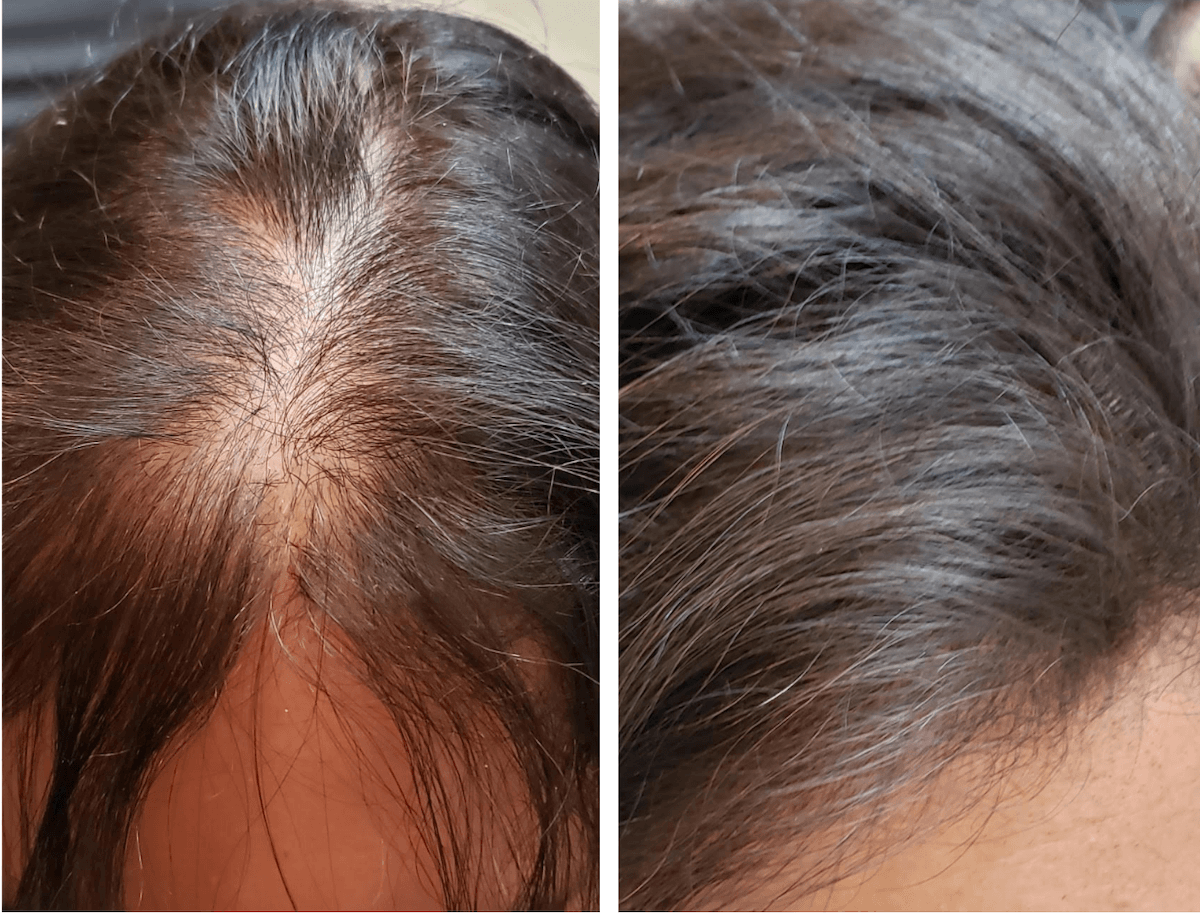
As estrogen and progesterone decline during perimenopause and menopause, hair follicles become more sensitive to androgens — the hormones responsible for thinning and shedding. The result is often overall scalp thinning, a widening part line, or hair that feels finer and more fragile than it once did.

Thyroid Disorders

Both an underactive thyroid (hypothyroidism) and an overactive thyroid (hyperthyroidism) can disrupt the hair growth cycle, causing diffuse shedding or thinning across the scalp. Unlike most hair loss, thyroid-related loss tends to be gradual and all-over — and many women don't connect it to their thyroid until it's already advanced.

PCOS

Polycystic ovary syndrome (PCOS) causes elevated androgens — male hormones present in all women, but excessive in those with PCOS. This hormonal imbalance can trigger female pattern hair loss along the top and crown of the scalp, often beginning as early as the late teens or early twenties.

How Hormonal Hair Loss Affects Your Hair

Unlike some other types of hair loss, hormonal hair loss tends to develop slowly and evenly — which can make it easy to overlook in the early stages. Most women first notice a widening part line, more hair in the brush or drain, or a general reduction in thickness and volume. Because hormonal shifts affect the entire scalp rather than one localized area, the loss is often described as a gradual thinning that's difficult to pinpoint until it becomes more significant. The sooner it's addressed, the more options you have.

Signs & Symptoms of Hormonal Hair Loss

Knowing what to look for can help you catch hormonal hair loss early and take action before it progresses. Common signs include:

Frequently Asked Questions About Hormonal Hair Loss

Yes — hormonal imbalances are one of the most common causes of hair loss in women. Estrogen, progesterone, androgens, and thyroid hormones all play a role in regulating the hair growth cycle. When these hormones fall out of balance, follicles can enter a prolonged resting phase, leading to increased shedding and visible thinning.
Hormonal hair loss typically appears as gradual, diffuse thinning across the scalp — rather than distinct bald patches. Women often notice a wider part line, reduced overall volume, or more hair than usual in their brush or drain. It can develop slowly over months or years, which is why many women don’t recognize it until it becomes more significant.

Not always. In some cases — particularly when triggered by a temporary hormonal shift like postpartum changes or a thyroid imbalance — hair can regrow once hormones stabilize. In other cases, such as menopause-related thinning or PCOS-related female pattern loss, it may be ongoing. Either way, the Hair for Life Center can help by using our exclusive technique, the Intralock Process, to enhance the appearance of full hair while you manage the underlying cause.

Hormonal hair loss can begin at any age. Women with PCOS may notice it as early as their teens. Postpartum hair loss typically begins within a few months of giving birth. Menopause-related thinning usually starts in the 40s or 50s. If you’re noticing changes in your hair, it’s never too early — or too late — to reach out.
It can. Significant stress can compound hormonal hair loss by triggering telogen effluvium — a separate condition where large amounts of hair shift into a resting phase and shed at once. Managing stress is beneficial, but it won’t always reverse an underlying hormonal cause. The Hair for Life Center provides a solution that works regardless of where your hair loss currently stands.

Absolutely. The Intralock Process is designed to work with hair in any state — whether your loss is gradual and diffuse or more pronounced. It restores the appearance of full, healthy hair without surgery, glue, clips, or cylinders and is a proven solution for women experiencing all types of hormonal hair loss.

Hair Restoration for Hormonal Hair Loss: The Hair for Life Center

The Intralock Process

Managing hormonal hair loss is deeply personal — and we understand that. At The Hair for Life Center, our role isn't to wait for your hormones to sort themselves out. It's to help you look and feel like yourself right now, while you work through whatever is happening inside your body.

The Intralock Process is a non-surgical technique exclusively at The Hair for Life Center that blends real human hair between your fine, thinning hair — restoring fullness along the part line, at the crown, and wherever thinning has taken hold. The result is natural, full, healthy hair that you wash, brush, and style just like your own — in as little as 2 to 3 hours, in the complete privacy of your own room.

No glues. No clips. No cylinders. No surgery. Just your hair, full again.
Scroll to Top