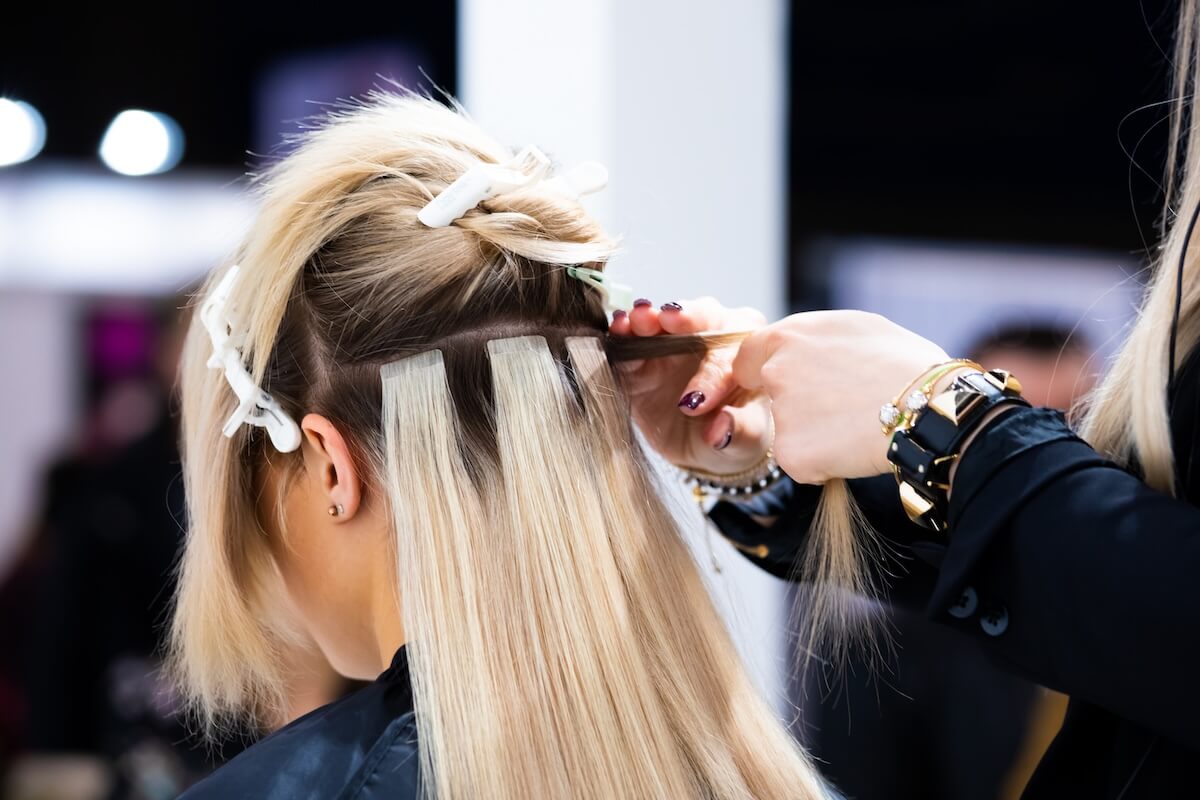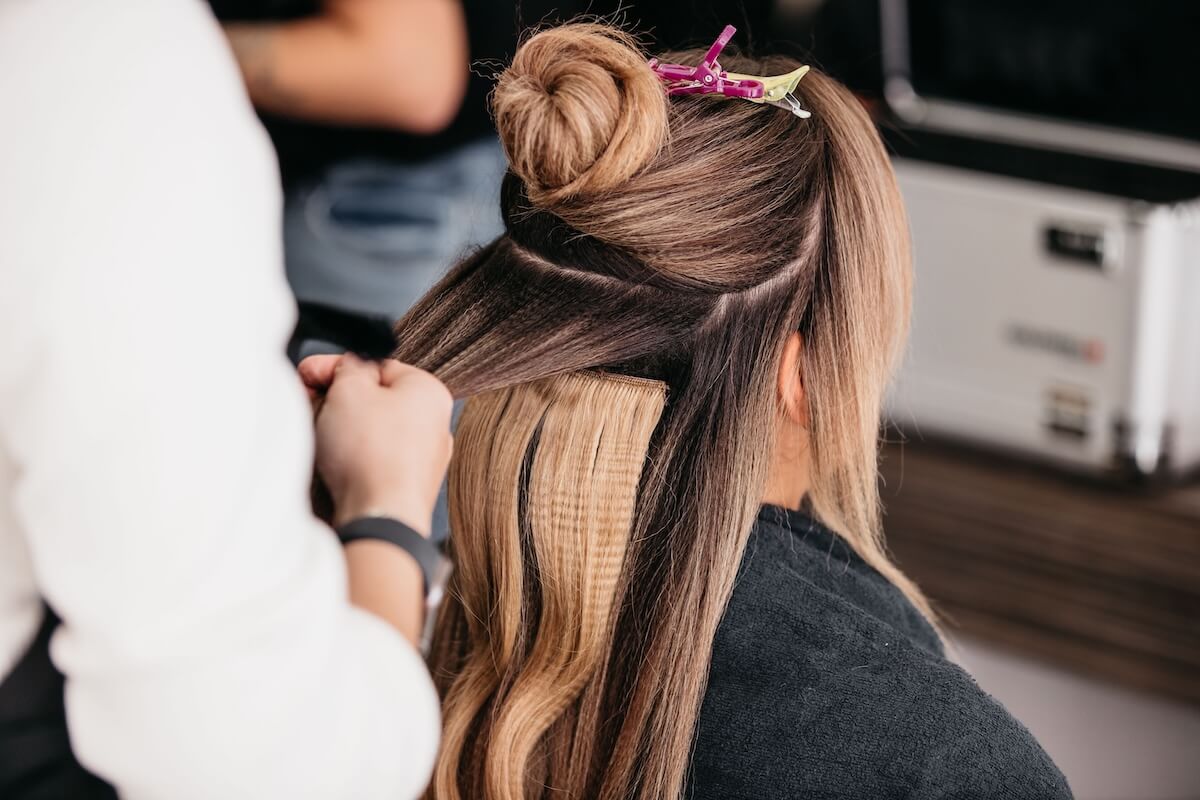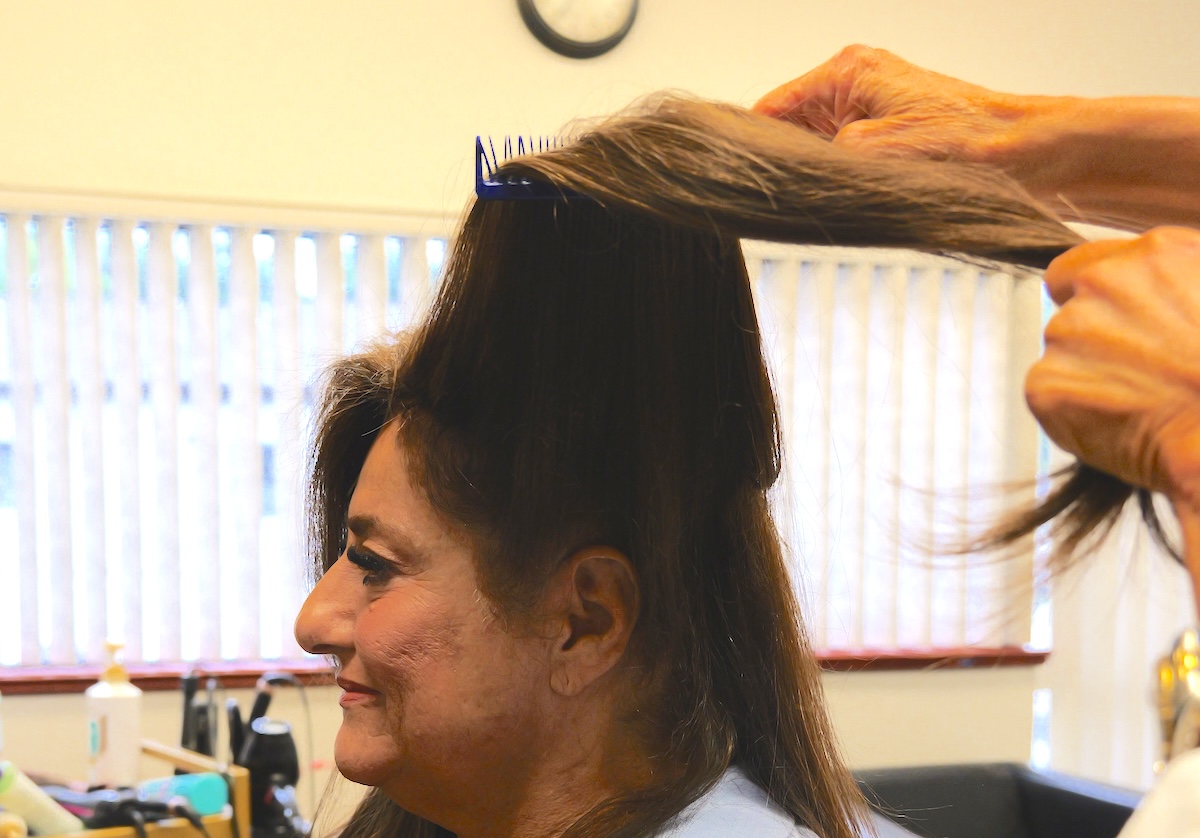
“Non-surgical Hair Restoration” is not a method. It is a category, and it contains approaches that have almost nothing in common with each other. A glued-on hairpiece and a strand-by-strand integration are both technically non-surgical. So are clip-in toppers, micro-ring extensions, and mesh systems. What actually separates them — and what determines whether your own hair is better or worse off in two years — is how the added hair attaches.
That is the question almost no provider leads with, and it is the only one that reliably predicts how you will feel about the decision later.
Why “non-surgical hair restoration” tells you almost nothing
The term exists to distinguish these options from hair transplants, and for that purpose it is useful. Transplants involve incisions, anaesthesia, and recovery. Everything else does not. Fair enough.
But once you are inside the non-surgical hair restoration category, the label stops doing any work. It groups together methods that differ enormously in how much tension they place on your hair, whether you can reach your own scalp to wash it, whether they can be removed, and what condition your hair is in when you stop. Two women can both say they had “non-surgical hair restoration” and have had experiences with nothing in common.
So when you are comparing providers, treat “non-surgical hair loss restoration” as the beginning of the conversation rather than an answer.
The non surgical hair restoration attachment method is the real distinction
Here is what is actually on the market, grouped by how the hair is held on.
Adhesives and glues
A hairpiece or wefts bonded directly to the scalp or to your hair using medical-grade adhesive or keratin bonds. Holds securely and can look good. The trade-offs are that adhesive sits against your scalp for weeks at a time, removal requires solvents, and the bond point concentrates stress on whatever it is attached to. Repeated application and removal is where damage tends to accumulate.
Clips
Small snap clips sewn into the base of a topper or wig, clipping onto your existing hair. The main advantage is that it comes off at the end of the day, which gives your hair genuine recovery time. The trade-off is that all of the piece’s weight hangs from a handful of anchor points along the perimeter — and those points are usually at the edge of the thinning area, where the hair is already compromised.
Metal cylinders and micro rings
Small metal rings clamped onto a few strands, with added hair attached to the ring. Precise placement, no adhesive. But the attachment surface is very small, so the load per strand is high, and clamping applies pressure to hair that may already be fragile.
There is also a practical consideration most people do not think about until it matters: metal attachments generally have to be removed before an MRI or certain X-rays. If you have a condition that means regular imaging, that is worth raising before you commit rather than discovering later.
Mesh and netting bases
A fine net is fitted over the thinning area, your own hair is pulled through the holes, and additional hair is tied into the netting. It distributes weight across a wider area than single-point methods, which is a genuine advantage.
The trade-off is scalp access. There is now a layer between you and your scalp, which changes how you wash and can allow product and sebum to accumulate underneath. Some studios decline to fit mesh systems at all for this reason, which is worth knowing — not because mesh is indefensible, but because it tells you the concern is real rather than competitive noise.
Filament looping, strand by strand
A fine filament is looped around a small group of your own strands, with added hair attached at that point, repeated across the area. No base, no netting, no adhesive, no metal. Weight is distributed across many small groups rather than concentrated on a few, and the scalp stays fully accessible.
The trade-offs are that it is not removable at will, it requires enough existing hair to loop onto, and it is not an off-the-shelf purchase — it needs a consultation and a custom hair order.
The five questions that actually separate non surgical hair restoration methods:
Whatever a provider calls their method, these five answers will tell you what you are dealing with.
- How is the weight distributed? Across a wide area and many attachment points, or concentrated on a few? This single answer predicts most of the long-term risk.
- Can I reach my own scalp? If something sits between you and your skin, ask directly how washing works and what happens to buildup underneath.
- What is against my scalp or my hair, and for how long? Adhesive, metal, netting, or nothing but your own hair and a filament. Weeks at a time, or removed daily.
- What condition is my hair in if I stop? Ask this one plainly and listen carefully. A method that leaves your hair as it was is a fundamentally different commitment from one that does not.
- What does maintenance involve, and how often? Not just cost — what physically happens at the appointment, and whether the attachment points move so the same strands are not carrying the load indefinitely.
What “proprietary” and “exclusive” actually mean
Worth being straight about this, since nearly every provider in the category uses these words, including us.
“Proprietary” means a business developed its own technique and does not license it out. It does not mean the technique is better, and it does not mean it is unlike anything else. It is a statement about ownership, not quality.
The same applies to trademarked method names. A trademark protects the name, not the results. Some named methods are genuinely distinct in how they attach; others are a standard technique with a brand on it. You cannot tell which from the marketing, but you can tell from the answers to the five questions above — because those are about mechanics, and mechanics are hard to spin.
If a provider cannot or will not explain plainly how the hair attaches, that is the useful signal.
Method matters less than fit
All of that said, the best method in the abstract is not necessarily the right one for you. The pattern of your hair loss changes the answer considerably.
Diffuse thinning from hormonal changes needs added density throughout, so methods that cover one zone tend to disappoint. Patchy loss from alopecia or trichotillomania needs something mapped to where the loss actually is, which rules out most off-the-shelf pieces. If there is very little hair remaining — after chemotherapy, or with advanced alopecia — methods that attach to existing hair may not be viable at all, and a wig or medical prosthesis is the honest answer.
If you are not sure which pattern you have, it is worth identifying the cause first. It narrows the options considerably before you talk to anyone.
Frequently asked questions
What is the difference between hair integration and hair extensions?
Extensions add hair below the crown for length and fullness through the lengths. Integration methods add density within the thinning area itself, including at the part and crown. If you can see scalp, extensions will not address it. Confusingly, “integration” is also used specifically to mean mesh systems, so ask what a provider means by it rather than assuming.
Is mesh integration bad for your hair?
It is not inherently damaging, and it distributes weight better than single-point methods. The genuine concerns are scalp access and buildup underneath the netting, which is why some studios decline to fit them. If you are considering mesh, ask specifically how washing works and how the scalp underneath is assessed at each maintenance visit.
Which non-surgical method causes the least damage?
As a general rule, methods that spread weight across many attachment points and leave the scalp accessible carry the least risk, and anything removed daily carries less cumulative load than anything permanent. But the condition of your own hair matters as much as the method. A gentle technique on very fragile hair can still be too much.
Do any of these methods work if I have very little hair left?
Methods that attach to your own hair need something to attach to, though often less than women assume. Below a certain point, full-coverage options are the realistic answer. This genuinely cannot be assessed from a description — it needs someone to look.
How do I compare providers who all use different names for their methods?
Ignore the names and ask the five mechanical questions above. Weight distribution, scalp access, what touches your scalp and for how long, the condition of your hair if you stop, and what maintenance physically involves. Providers offering genuinely different things will give you noticeably different answers.
Should I be worried if a method is not FDA-approved?
Cosmetic hair attachment methods are not medical devices or drugs, so FDA approval is not the relevant framework. If a provider cites approvals, ask what specifically was approved and by whom. What matters more is the practitioner’s experience with hair like yours.
Ask the mechanical questions
If you take one thing from this: a provider who answers the five questions plainly, including the trade-offs, is telling you something useful. One who redirects to how natural the results look is telling you something too.
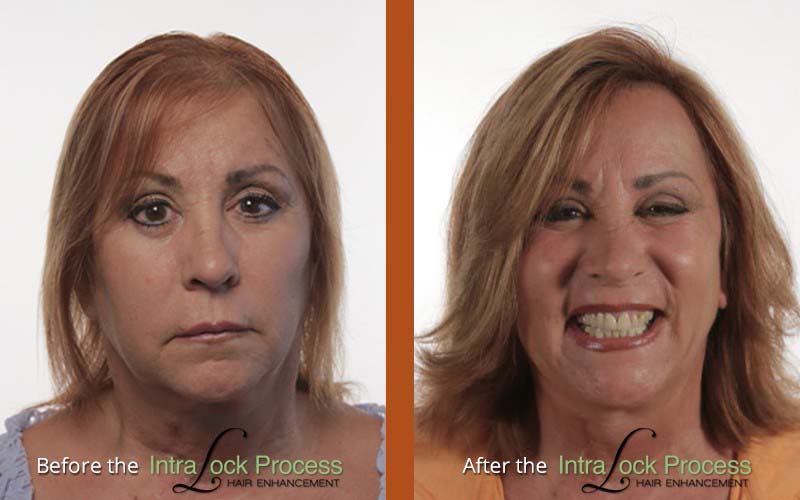
The Hair for Life Center has worked with women across the Tri-State Area for over 30 years, and our own approach falls into the last category described above. The Intralock Process loops a fine filament around 4 to 8 strands of your existing hair, safely creating length, volume, and density in as little as 3 hours. No glues. No clips. No cylinders. No surgery. Whether it suits your hair depends on the pattern of your loss and what your existing hair can carry — which is what a consultation determines.
Every client relationship begins with a free, private, no-pressure consultation. We assess your hair and scalp, answer the mechanical questions in detail, and tell you honestly if another approach would serve you better. You can also see results from women with different patterns of hair loss.