Hair extensions can be safe for thinning hair, and they can also make it permanently worse. Which outcome you get depends on four things: the attachment method, how the weight is distributed, how long the extensions stay in, and the condition your hair is in before you start.
That is a less satisfying answer than either “yes, they’re perfectly safe” or “no, never” — but those are the two answers you will find most often online, and both come from people with something to sell. Here is what actually determines the risk.
How extensions damage hair, when they do
The mechanism is mechanical rather than chemical. Added hair has weight, and that weight pulls on whatever it is attached to. Your own strands transmit that pull down to the follicle.
Sustained tension on a follicle causes inflammation. Inflammation over months causes the follicle to produce a finer, weaker strand. Continued long enough, the follicle stops producing hair at all — and at that point the loss is permanent. This is traction alopecia, and it is one of the few forms of hair loss that is entirely preventable and entirely irreversible once established.
The American Academy of Dermatology is direct about this: constant pulling can break strands, damage the follicles beneath them, and lead to hair that cannot grow back.
None of that means extensions are inherently dangerous. It means tension is the variable that matters, and everything below is really about managing it.
What makes one method riskier than another
Attachment surface area
This is the most important factor and the one least discussed. Some methods spread the weight of added hair across a wide band of your own hair. Others anchor it to a very small number of strands. Same weight, dramatically different load per follicle.
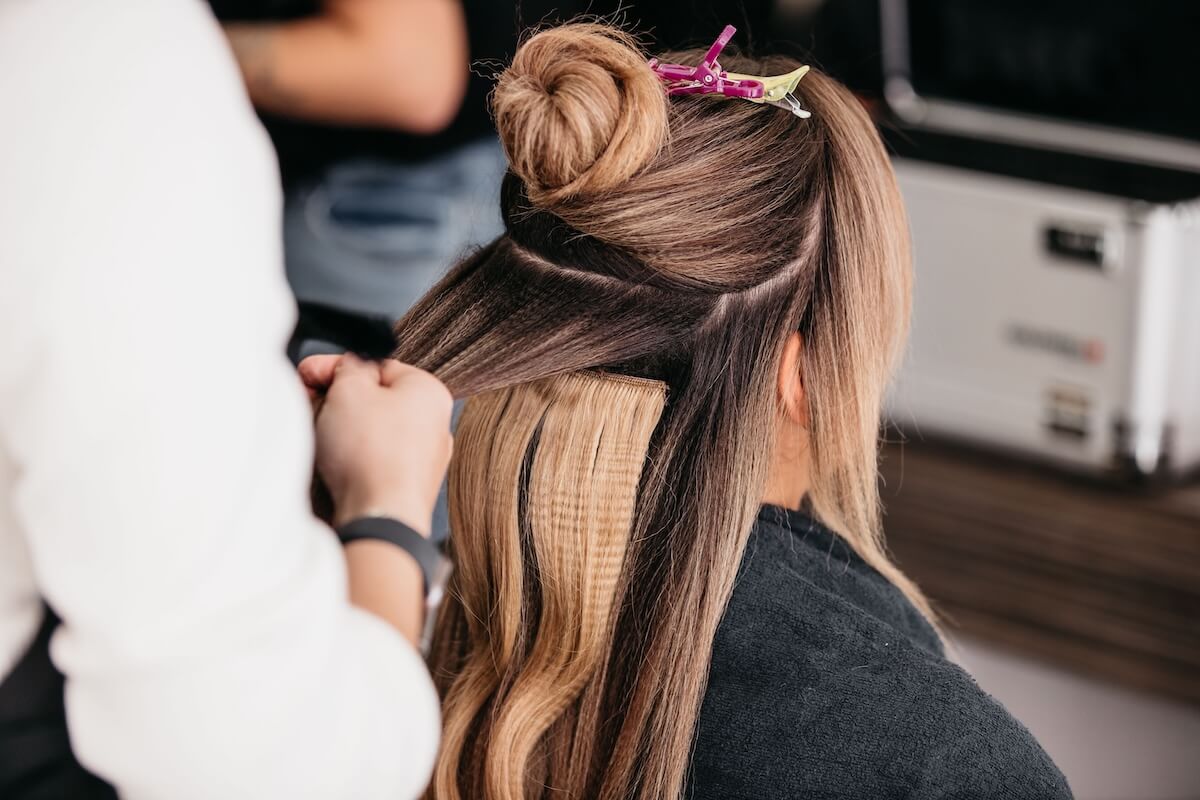
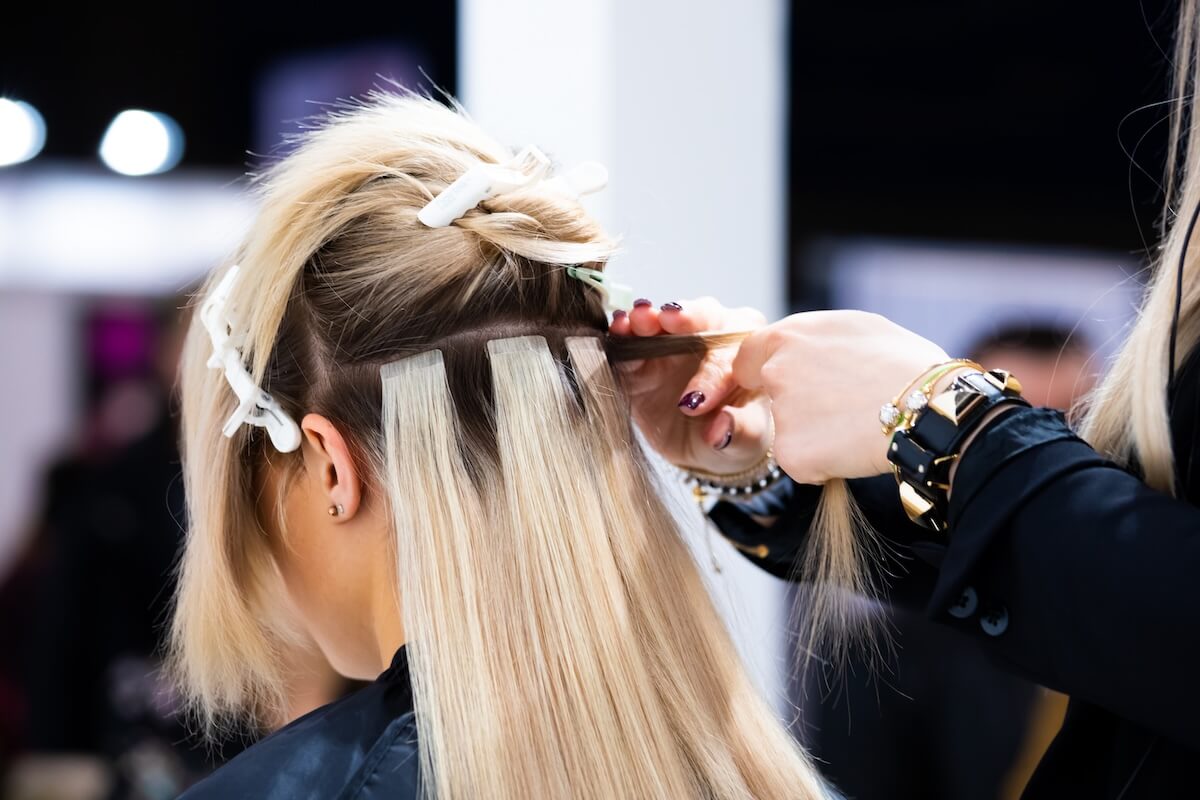
Tape-in wefts and hand-tied wefts sit at the wider end. Individual keratin bonds and micro-rings sit at the narrower end — which is precisely why they can be placed so precisely, and also why they concentrate stress. Neither is universally right, but on already-fine hair the difference is significant.
Total weight relative to your density
A woman with dense hair can carry considerably more added hair than a woman with diffuse thinning, because the load is shared across more anchor points. The common mistake is ordering the amount of hair you want rather than the amount your hair can hold. Wanting dramatic length when your density is already reduced is how people get into trouble.
How tightly it was installed
Tightness is not thoroughness. If an installation hurts, if you get a headache in the hours afterwards, or if you feel soreness at the attachment points, that is tension your follicles are absorbing — not a sign the work was done well.
Duration and continuity
Damage accumulates. Wearing extensions for a season is a different proposition from wearing them continuously for years with no breaks. Follicles under constant load never get a recovery window.
Warning signs to take seriously
Stop and get an assessment if you notice any of these:
- Headaches or scalp soreness after installation or a move-up appointment
- Tenderness or small bumps at the attachment points
- Your hairline appearing to move backwards, particularly at the temples
- Short broken strands sticking up around the attachment sites
- More shedding at move-up appointments than seems reasonable
- Attachment points becoming visible because the hair around them has thinned
Tenderness that comes and goes is worth watching. A receding temple hairline is worth acting on immediately, because that is traction alopecia in progress rather than a warning of it.
When extensions are the wrong choice
There are situations where the honest answer is no, or not yet.
During active shedding. If you are in the middle of a shedding episode — postpartum, stress-related, or following an illness — your hair is already cycling out faster than usual. Adding tension to strands that are on their way out is poor timing. Waiting for the shedding to settle is usually the better call.
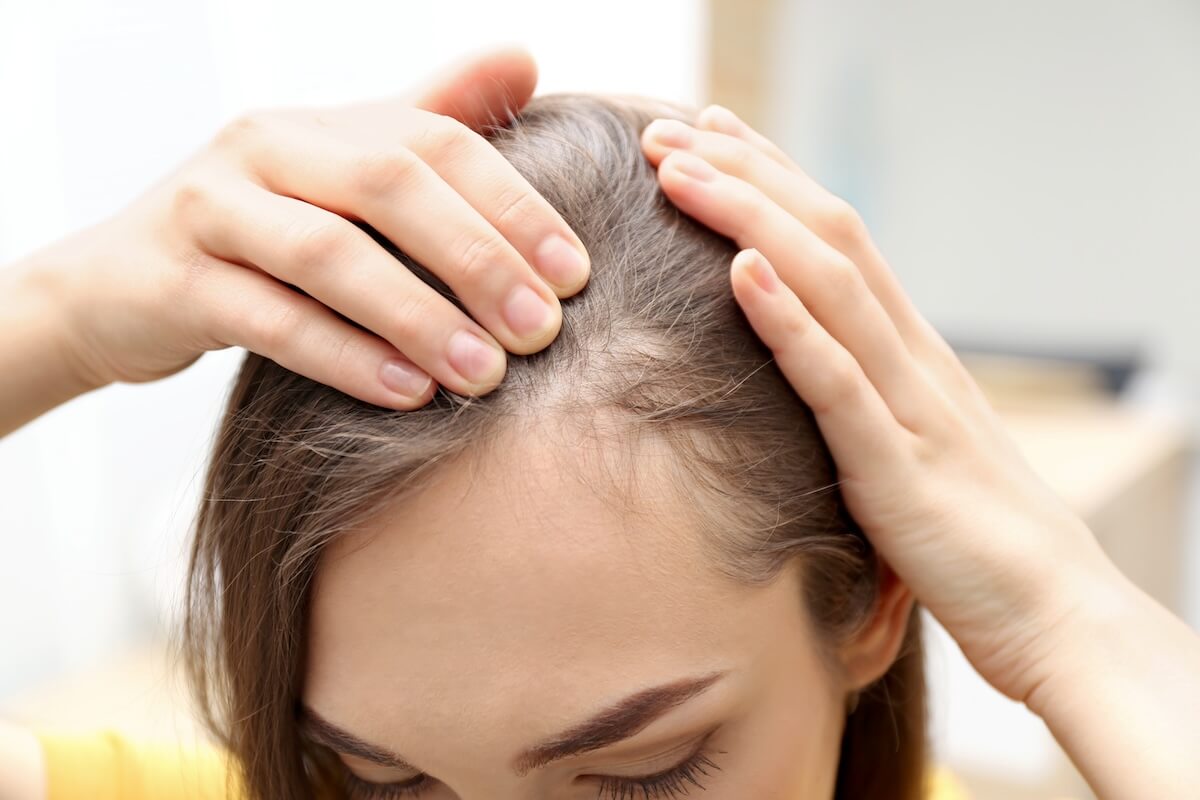
When the real concern is a visible part. Extensions attach below the crown, so they add fullness through the lengths while a widening part stays exactly as visible as it was. Many women with hormonal thinning spend considerably on extensions and are disappointed for this reason — not because the work was bad, but because it was the wrong tool for the problem.
When your hair is fragile rather than sparse. If your hair snaps off before gaining length, added weight accelerates the breakage.
When there is scalp inflammation, tenderness, or an undiagnosed cause. Get a diagnosis before adding anything. Some causes of hair loss respond to treatment, and some are made significantly worse by tension. A dermatologist can distinguish them; a stylist cannot.
How to reduce the risk if you do proceed
- Choose a method that spreads weight widely rather than one that concentrates it on a few strands.
- Order less hair than you are tempted to. Length and volume both add load.
- Speak up during installation. Pain is information, not something to tolerate politely.
- Take breaks. Give your follicles periods without load.
- Have someone check your scalp, not just your hair, at every appointment.
- Work with someone experienced in fine and thinning hair specifically. Extension skill and hair-loss knowledge are different things, and not everyone has both.
Options that add volume without the same tension
If tension is the concern, it is worth knowing that extensions are one of several ways to add hair — and not the gentlest. Clip-ins that come out daily place far less cumulative load than any permanent method. Toppers cover a thinning crown, though their weight concentrates at perimeter clips. Integration methods distribute added hair across many small groups of strands rather than loading a few.
Each has its own trade-offs, and none is right for everyone. If you are still deciding, it may help to understand what stage your hair loss is at before choosing a method, and to identify what is causing it.
Frequently asked questions
Are hair extensions safe for thinning hair?
They can be, with the right method and realistic expectations. Risk comes from weight concentrated on too few strands for too long. Methods that distribute weight across a wide section of hair are much gentler than single-bonded ones, and clip-ins removed daily are gentler still. If your hair is fine, fragile, or actively shedding, get an in-person assessment first.
Do hair extensions cause permanent hair loss?
They can, though not usually from one installation. Permanent loss comes from traction alopecia, which develops when follicles stay under tension for months or years. Once a follicle has stopped producing hair, it does not restart. Caught early — while there is tenderness but before the hairline has changed — the damage is often reversible.
Which type of hair extension is safest for fine hair?
Generally, methods that spread weight over a wide attachment area, and lighter amounts of hair. Clip-ins carry the least cumulative risk because they come out every day. Single-bonded methods concentrate the most stress per follicle. The right choice still depends on your density and scalp condition.
How long should I wait after a shedding episode before getting extensions?
Until the shedding has clearly settled and you are seeing regrowth. Adding tension to hair that is already cycling out early tends to compound the problem. There is no fixed number of months — it depends on the cause and how you are recovering.
Can I get extensions if I am using minoxidil or another treatment?
Often yes, but the two need to be coordinated. Some attachment methods make it difficult to apply a topical treatment to the scalp properly, which undermines the treatment you are paying for. Raise it with both your prescriber and whoever is doing the work.
My extensions hurt. Is that normal?
No. Mild awareness of a new weight for a day or two is one thing; pain, headaches, or soreness at the attachment points is tension your follicles are absorbing. Ask for it to be loosened, or removed.
Get an honest assessment first
Most of the damage we see could have been avoided with one conversation before the first installation. Whether extensions are safe for your hair depends on things that have to be looked at: the pattern of your thinning, how fragile your strands are, and what your scalp is doing.
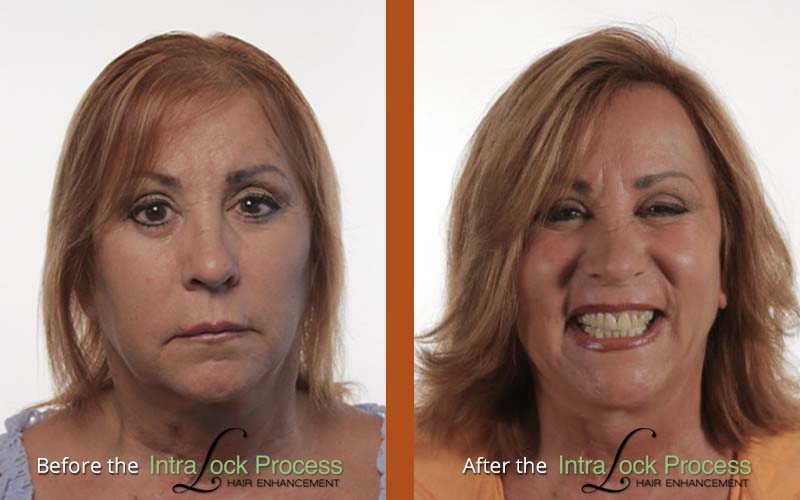
The Hair for Life Center has worked with women across the Tri-State Area for over 30 years, much of it with women whose hair was damaged by methods that were not suited to it. Our own approach was built around that problem — the Intralock Process blends real human hair with your existing hair without surgery, glues, or downtime, distributing added hair across small groups of strands rather than clamping onto a few. It is not a wig. It is not a topper. No metal, no cylinders.
Every client relationship begins with a free, private, no-pressure consultation. If extensions are a reasonable option for your hair, we will say so. If they are not, we will tell you that too. You can also see results from women in similar situations.